Paradox: When Joys Become Sorrows

In two weeks, my Jerusalem sojourn will end. Here, at the crossroads of religions, cultures, hopes and fears, I came to accept a series of shape-shifting paradoxes. The more I learn, the more complex it seems. The more I try to capture firm explanations of the Israel/Palestine “situation,” the more I realize that exceptions, qualifiers, footnotes, and sidebars can overwhelm the central narrative.

It will take me months, years, maybe forever to sort it out.

An orange tree and its blossoms fill the air with fragrance in springtime at Tantur.

The greatest treasures, by far, have been the people I met here. Tantur welcomes a never-ending stream of fascinating people from countless political, geographic and religious backgrounds. They come for a few days, weeks, or months — some for a year or several years.

Quickly, we grow uncommonly close through heartfelt conversations – scholars and spiritual or justice seekers who dream of finding hope for just resolutions to the region’s conflicts, and common ground among the world’s religions. We have diverse goals but share a passion for knowing other cultures.

Some staff have lived here all their lives, mostly Palestinian Christians and a few Jews and Muslims. Many open their homes and lives to those who come only briefly – they become part of our education.

An example: one staff manager is a native of France. His wife, from Texas, is an accomplished writer. They met in a Syrian monastery. She plows the painful terrain of refugees in the region between Greece and Iraq and he prepares for Syrian Catholic priesthood. They live here with their three children (9, 6 and 4) who are trilingual (French, English and Arabic). Such mosaics are common here.

Other staff and volunteers include a Quaker taking a year off from her seminary studies at Princeton; a rabbinical student who will be ordained in the fall; a married couple who are members of a New York Bruderhof community; a Catholic priest who was missionary, parish priest and seminary professor in Africa before coming to Tantur; a Chicago-raised, marathon-running daughter of an Israeli-Arab father. And me. As I said – a mosaic.

People from all over the world come to partake of Tantur’s Continuing Education programs – three weeks, a month, six weeks, three months – also spiritual seekers who drink of the religious waters here, and learn something of the politics too. And then they’re gone.

Therein lies the cruel paradox. We get to know each other, worship together and learn about each other’s lives and spiritual traditions. We tell each other our stories, we laugh and play games over beer and wine, and sometimes we shed a tear or two. Among these have been priests and nuns from Ireland, England, Poland, Canada, Australia, Philippines, and more; a sister with an angel’s singing voice from a South Pacific island; a Brother from the Taizé community in France; and an ordained Lutheran pastor from Finland, working on her doctoral dissertation.

And then – one by one, they go. Soon, I’ll be the one to go. The treasures of these passing relationships slip through our fingers as the farewells become the sorrows.
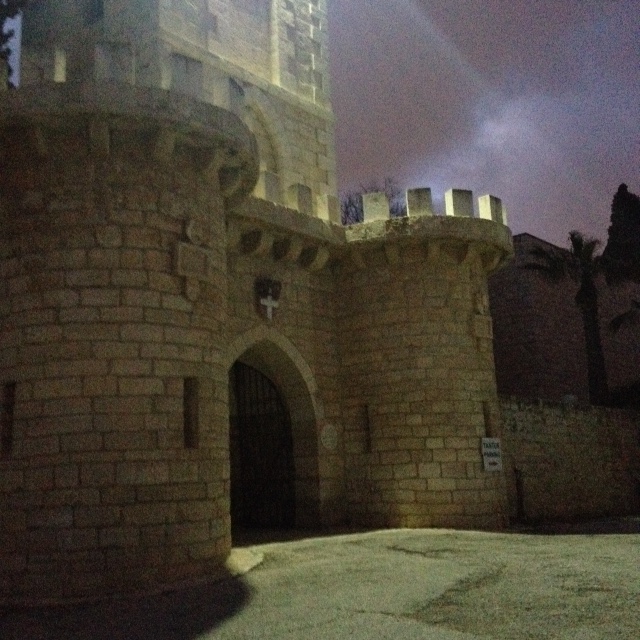
TanturArchEntranceEvening
Tantur’s arched entrance: Remnant of a 19th century hospital that once stood here.

No doubt, I’ll stay connected to some of them, but the Tantur paradox plays out, week after week, month after month, year after year. The consolation is knowing that seeds planted here will sprout new life as folks pass through Tantur and move on to the ends of the Earth.

Quite fitting for an Easter/Passover departure and homecoming!
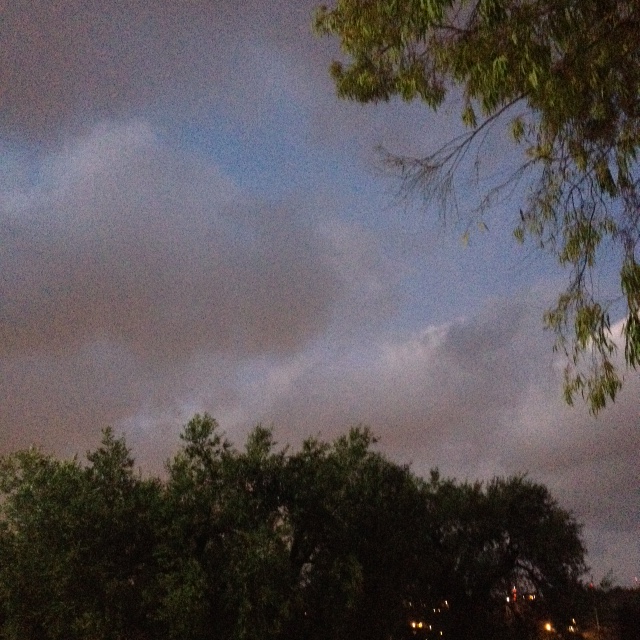
TanturSunsetSkies
Magnificent Jerusalem & Bethlehem skies as the sun sets and darkness descends.

(This essay was first published in the March 23 edition of the Barnstable (MA) Patriot.

Peace Forest

It was a picture-perfect day: bright blue sky, puffy white clouds here and there, and springtime growth emerging abundantly in fields all around. That was the backdrop as 13 members of the Rotary Club of Jerusalem boarded a small bus to go to the Paul Harris Peace Forest just outside Tzfat, Israel some three hours drive north of Jerusalem.

Tzfat (or Safed, or any of several other spellings) is the birthplace of Jewish mysticism — the rabbis who wrote and taught the Kabbalah came from Tzfat. It is also a beautiful small town, now an artists’ colony too, perched on the side of the mountains in the Upper Galilee. Most important for our trip this week, however, is the Paul Harris Peace Forest just outside of Tzfat, created some 40 years ago by the Rotary Club of Tzfat.

For readers unfamiliar with Rotary International, a little background: Paul Harris was the founder of Rotary, a bit more than a hundred years ago in Chicago. Today, Rotary has more than 33,000 clubs and 1.2 million members spread across nearly all the nations of the world. Rotary is dedicated to community service at the local level, and international peace and understanding at the global level.

The Paul Harris Peace Forest is a quintessential Rotary project. In creating it, the Tzfat Club developed a beautiful, natural forested park for the enjoyment of the folks who live in and near Tzfat, and also for the many visitors who come to enjoy the Upper Galilee with its beautiful scenery, moderate climate, and many sites both archeological and religious. In creating the Paul Harris Peace Forest, the Tzfat Rotary Club also made a bold gesture toward environmental sustainability and a gentle yet firm statement about Rotary’s commitment to peace.

We were visiting the Paul Harris Peace Forest on this particular day because the global President of Rotary International, Ian Riseley of Australia, was visiting the District to which all the Israeli clubs belong. At the Peace Forest, monumental stones are carved with the names of the Presidents of the Tzfat Rotary Club, and others with the names of the presidents of world-wide Rotary International. Flags flew exuberantly over the site.  In the photo on the right below are the flags of Australia (right), Rotary International (center right), Israel (center left), and on the far left, the flag of the forest conservation agency of Israel.

It was inspiring to see clubs from all over Israel come together to celebrate the mission of Rotary. The pride in the Peace Forest was evident. Sadly, the Rotary Club of Tzfat had, over the years, aged and dwindled in numbers, to the point that the Club was forced to close several years ago. Nevertheless, the Peace Forest lives on in tribute to the vision of those club members who started it so many decades ago. Efforts to establish a new club in Tzfat continue, and the current District Governor announced that plans are underway to create a second Peace Forest in the south of Israel.

In a brief ceremony, President Riseley thanked the clubs for their hospitality, and helped the current District Governor of Rotary in Israel to “unveil” the portion of the stone now carved with Riseley’s name. Then, everyone climbed the hill beyond to the spot a few hundred yards into the forest where a tree was planted in President Riseley’s honor.

Jerusalem Rotary Club President, Rabbi David Lilienthal (above, left), ably led our delegation, and presented International President Riseley with a gift — the Interfaith Calendar that the Jerusalem Rotary Club sells each year as one the many fundraising efforts that enable the Club to bestow scholarships to local students.

Finished with the ceremonials, and ready for lunch and libations after the long journey, we found our way to a vineyard and dairy farm nearby — a gem of a Upper Galilee establishment that one of the Club members knew about. Hidden away in an industrial park was a beautiful facility — selling wines amid the fields of grape vines all around, and serving numerous cheeses all based on the milk of goats that the dairy raises. We were soon served a delightful lunch of cheeses, homemade bread, salads and delicate omelets that fortified us for the long trip home. More than a few of us left with some wine, cheese or other goodies purchased as we departed.

Perhaps the most important element of the day was living out the most fundamental trait of Rotary — the fellowship and camaraderie that we shared on the journey. Amid Israel’s beautiful scenery and the details both sublime and mundane of our purpose, we all got to know each other a bit better.

No Words Part 2

As an addendum to my previous post, I’d like to share this essay — re-published this week by Haaretz, a left-leaning newspaper in Israel.

It was written back in October, 2015 just after a mass murder shooting took place at an Oregon community college. The author is a woman, and it details what she goes through to keep her personal gun license, and along the way, she offers insights about why Israel does not have the kind of mass shootings that are now so common in the U.S.

MassShootingVigil-UmquaCC.jpg
Candlelight vigil for Umpqua Community College shooting victims in Winston, Oregon, October 3, 2015. (Credit for photo: Reuters)

No. Words.

Is there anything left to say? The fact that the latest mass school shooting in the United States is hardly a surprise says it all.

The bits and pieces of data are stunning: since Sandy Hook in 2012, when 20 first-graders and 6 adult educators were murdered, there have been over 1600 mass shootings in the United States, 240 of these in schools. Since the beginning of 2018, there have been 18, a rate of 3 a week. Today I heard that while the United States represents only about 5% of the world’s population, we account for more than 30% of gun deaths world-wide. What is wrong with us?

Here in Israel, guns are ubiquitous. We see them everywhere, mostly on the young IDF soldiers (Israeli Defense Force) — 18, 19 and 20-year-olds, both women and men, who are obliged to serve (with some exceptions, but that’s another story). Everywhere I go, on  the public busses, at the sights to which pilgrims and visitors flock, in the shopping districts, outside the revered holy places — they are there, with a handgun casually swinging from their belts or a rifle slung over their shoulders.

Yet mass shootings of the type we have in the U.S. are virtually unknown here. For any civilian to get a gun for personal ownership involves months of applications, interviews, background checks, classes, and more. Months. And no one thinks that is too intrusive or a violation of rights.

Israelis and Palestinians are, however, deeply astonished, befuddled, and shocked at what we “allow” to happen in the United States. With the recent massacre at Marjory Stonemason Douglas High School in Parkland, Florida, however, I think I see a change.

When the gunman in Las Vegas killed scores of concert goers last October, Israeli after Israeli, Palestinian after Palestinian, asked me, “Why?” “Why do you Americans allow this to happen?? “Why don’t you DO something to stop it?”

Why indeed.

But now, hardly anyone asks anymore. They just shrug their shoulders and even if shocked, they have begun to just assume that this is the way America works, this is what Americans tolerate.

And indeed, we do allow this to happen. All the “prayers and thoughts” in the world don’t mask the fact that we allow this to happen.

I heard two heartbreaking stories yesterday: one mother of a young boy reported that her son asked, as she dropped him off at school, “Are those windows bullet-proof?”

How does a young child even know the term “bullet-proof”??

And the second — a young girl came home from school in tears, telling her mother that she HAD TO HAVE new shoes. Her sneakers, which she initially treasured because they blinked colorful flashing lights, were too dangerous now because they would reveal her whereabouts to a gunman.

How can we tolerate a nation in which children have to consider such scenarios?

Many people are now heartened to see the rising anger and activism among the young people who were survivors at Parkland … and beyond. The high school students (and younger) have begun to assume that since the adults won’t fix the problem, they’re going to have to do it. Marches and protests are planned. The youth are calling their elders to account.

That’s better than, once again, no change, I suppose. But what does it say about us that we have to look to children and youth to solve this problem for us?

It’s the season of Lent, time for some soul-searching. We’d better give those young people all the support they need, and then some.

Godde won’t help us if we don’t.

Dear Crossroads Readers and Followers

Please read my blog on Holocaust Remembrance Day at the WordPress website. For those of you signed up for email notification, especially important. The email contains only part of the text of the powerful poem I posted, and loses the formatting. So if you want to read it, go to https://kathleenschatzberg.com/2018/01/27/holocaust-remembrance-day-january-27/ — Sorry for the inconvenience, and thanks!

Kathy

Holocaust Remembrance Day: January 27

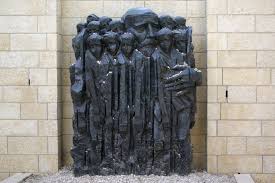
The United Nations took a resolution in 2005 to establish January 27 as International Holocaust Remembrance Day — that day chosen because it was on January 27, 1945 that the Red Army liberated Auschwitz-Birkenau, the largest Nazi concentration and death camp. Researchers and demographers have documented a genocide that included 200,000 Romani people, 250,000 mentally and/or physically disabled people, 9000 gay men, and 6,000,000 Jewish people. Of the six million Jews killed, one and a half million were children. No doubt there were more victims as yet undocumented.

YadVashemOrphans

The “ripple effects” (which makes it sound more benign that it is) have only just begun, more than 70 years later, to be recognized and understood. But that analysis is for another day. Today, we just remember. This poem by Raymond Friel does it better than I ever could.

Holocaust Memorial Day  ~  27 January  ~  by Raymond Friel

 One day

In a concentration camp

Two men and a boy

Were sentenced to execution

By hanging.


The men died quickly.

The boy, lighter, took longer.

The prisoners were made to watch.

A voice cried out,

“Where is God?”


Then there was silence.

Did God die

In the concentration camps?

Is it possible to pray

After such horror?


We pray now

Because some prayed in the camps

In the deepest darkness

We cry out,

“Where was humanity?”


We commit ourselves

To remember

That six million Jews

And others the Nazi regime

Labelled expendable

Were gassed to death

With cyanide,

Their dead bodies burned in furnaces,

Their ashes carried

On the wind.


We are not innocent

For manycenturies

Christians were hostile to Jewish people

Persecuted them

For the death of Jesus.


The holocaust took place

Within living memory,

In one of themost educated

And Christian countries

In history.


We beg forgiveness

For the crimes against the Jewish people.

Against humanity.

And pray for the grace

To be vigilant


To stand up

Against anti-Semitism and racism

In any shape or form

We may encounter it

In our world today.

From Raymond Friel’s Prayers for Schools
http://www.rpbooks.co.uk/products/1784/prayers-for-schools-prayers-resources-for-teachers

Oneness in Baha’i

Israel is at the crossroads of — among other aspects — many of the world’s religions, part of my logic in naming this blog “Crossroads.” According to multiple online sources, humans observe some 4300 different religions, although a handful of them claim millions, even billions of adherents. Here is a chart from the Pew Research Center showing the relative size and numbers for the world’s major religions (including the non-religious, or people who identify as agnostic, atheist, or “none”) —  

WorldReligions2015-PewResearchCtr

The Baha’i faith claims half as many adherents (7 million) as Judaism world-wide — Jews are two-tenths of 1% of the world’s population, and Baha’is are half that, or one-tenth of one percent. Yet Baha’i influence seems to outweigh their numbers. We have an active Baha’i community on Cape Cod, whose members engage with people of other faiths to address many social justice issues. The world headquarters of the Baha’i faith is in Haifa, Israel, a Mediterranean seaport about 60 miles north of Tel Aviv.

The faith originated in a messianic movement within Islam in the mid-1800s, in what was then Persia. The first Baha’i prophet, Ali Muhammad Shiraz, who founded the Bábí faith, taught that another prophet — in the manner of Jesus and Mohammed — would soon appear and establish a unity among religions. Islam was firmly established at that time in Persia, and Muslims believe there can be no prophet after Mohammed, so anyone claiming prophesy of a new sort was executed or banished.

In 1863, the second prophet of the Baha’i — Bahá’u’lláh — announced that he was this prophet. He was exiled, imprisoned in what was then Syria and is now Israel, in the coastal city now known as Acre — across a Mediterranean bay from Cape Carmel — the site of Mount Carmel and the city of Haifa.

The World Headquarters of the Bahai faith are now located in Haifa, and Baha’i faithful endeavor to make a pilgrimage to the site at least once in their lives. What is remarkable about the Baha’i faith is that it insists on the fundamental unity of all religions, and acknowledges the legitimacy of all religions as being authentic revelations of God. Similarly, they believe in the fundamental unity of all humans, rejecting racism and any kind of nationalism that separates or denigrates any other nations. They reject violence and advocate for peace in all humans’ relations with each other.

We could use more of that “one-ness of Baha’i” in our world now, couldn’t we?

The faith has no hierarchy, but various regional groups of Baha’i elect representatives who meet once every five years to discuss the conduct and tenets of the faith as they evolve in the world.

The Baha’i belief in the fundamental harmony among people and the world’s religions is reflected in the gardens that surround the World Headquarters — spectacular, terraced gardens on the side of Mount Carmel, looking out from the top of Cape Carmel to Haifa Bay below. The photos do not begin to really convey the splendor of these gardens.

For reasons that would require lengthy theological explanation, the number 19 is sacred in the Baha’i faith. Thus the Baha’i Gardens and the Temple at the center of the Gardens are constructed to reflect reverence for the number 19. From the top of Mount Carmel to the Temple, there are 19 terraces, and from the Temple on down to the base of the mountain are 19 more. Each are landscaped, gardened and pruned to perfection, one might say, “manicured.” I urge you to seek out more pictures in an internet search, or even better, find a way to visit these gardens yourself.

One hundred gardeners are employed to keep the gardens in their pristine beauty, and it is said that this is not enough. They work always at finding highly efficient ways to manage the plants and keep the buildings, terraces, walking paths, stairs, and statuary in spotless condition. More than 400 species of plants thrive, chosen not only for their beauty but for their adaptation to the arid climate. The terraces are linked by stairs (19 steps for each terrace!), and stone troughs carrying water down the mountainside flank each side of the stairs, making it easy for the gardeners to tap water at every level.

When I visited, we descended from the top with our Russian Israeli guide, every single step from the top to the bottom — more than 700 steps. I was glad we worked our way down rather than up! Besides, the descent afforded us continuous stunning views of the terraces laid out before us, with the Bay of Haifa shimmering at the bottom.

To say the Baha’i Gardens are remarkable is a massive understatement. They have been designated a World Heritage Site, along with another site across the bay in Acre — the mansion where the Second Prophet spent the final years of his life, and where his remains are interred. That site is also surrounded by gardens.

I’ve only scratched the surface here, both to describe the Gardens and to outline the basics of the Baha’i faith. For now, suffice it to say that the “one-ness” that is central to the faith is also reflected in these Gardens: beauty and serenity abound in both.


Christmas Eve in Bethlehem: Let the Rains Come Down

In the past few weeks, sorrow and anger mingled palpably (and sometimes violently) in the wake of  President Trump’s reckless announcement that the US would recognize Jerusalem as the capital of Israel  — ignoring the well-known claims on Jerusalem by Palestinians, both Muslim and Christian. Personal plans and the tourism economy were disrupted as protests and retaliation frightened travelers away, leaving many of us grieving the loss of the “Christmas Spirit.”

Yet, as the clock ticked down to Christmas Eve, I thought I sensed a camaraderie of burdens shared becoming lighter, a spirit of moving closer to friends and family, and a determination to hold fast to the joy of the season, no matter the obvious political disturbances.

I went to Midnight Mass in Bethlehem — but not in the famous Church of the Nativity in Manger Square,  traditionally thought to be the actual location of the manger. No, for Christmas Eve mass there, one needs tickets, long since scooped up by both pilgrims and locals (who gets those coveted tickets is another story entirely). Besides, I learned that church would be packed, every square inch occupied by mostly-standing worshipers. Definitely not my idea of a grace-filled spiritual experience.

With a friend, I went to Midnight Mass at the Chapel of the Divine Child at Bethlehem University. Founded in 1973 by the De La Salle Christian Brothers, it is the first university established in the West Bank, and has a student population that is nearly all Palestinian — 76% Muslim, 24% Christian (and 77% female, 23% male). It offers a typical mix of baccalaureate programs, with special emphasis on business, hospitality management, and nursing and other health professions.

It’s a small chapel, and a beautiful one, with soaring heights that give a more expansive feeling than its actual footprint. The pews seat only about 100 people, but last night, they put an extra chair next to each pew, narrowing the center aisle but adding about 20 seats, and then they added more seating around the altar.

BethlehemUnivMidnightMass122517

It turned out the extra seating was unnecessary: only about half of the seats were filled. Why? The skies opened up on Christmas Eve day, and the rain fell, hard and steadily all day, all night, and on into midday on Christmas Day.  The winds were howling too, and the temperatures dropped to the 40s (considered quite frigid around here!). I think many folks decided to forego the Midnight Mass rather than battle the rain and wind.

The rain is a gift from God, many people said: badly needed, as the region has had a parched fall season, and in fact, recent years have been dryer than normal, so the rain was welcome indeed. I’d say there’s another reason the rain was a gift from God — it’s hard to get protesters out, hard to set tires or trashcans on fire when it’s pouring rain!

The mass was beautiful — full of the sense of great good fortune to celebrate the birth of Jesus in the place where he was born. Students were prominent in serving various parts of the mass, most notably choir and lectors. The music and readings were in both Arabic and English.

And yes, we prayed for peace — that the promise of peace expressed in the presence of Jesus among us will be fulfilled in this land that gave him to the World.

We slipped quickly through the reception that followed (that too beautifully delivered by students),. We greeted a few people and took one delicious chocolate-covered strawberry on our way out — back into the rain. It was well past 2:00 a.m. when we got back to Tantur, still in relentless rain, a soaking that felt nurturing, cleansing and hopeful.

“The Troubles”

In the past couple weeks, the conflicts that beset the people of Israel and Palestine (and the Middle East in general) have erupted to new levels of tension — producing fear and anxiety, anger and violence. The President of the United States deliberately caused this disruption with his reckless action to “recognize” Jerusalem as the capital of Israel. The Jerusalem Post (which is considered a conservative and right-leaning newspaper), called Trump’s action “… a grandstand publicity stunt by an American president who neither understands nor cares about anything beyond his own ego gratification.

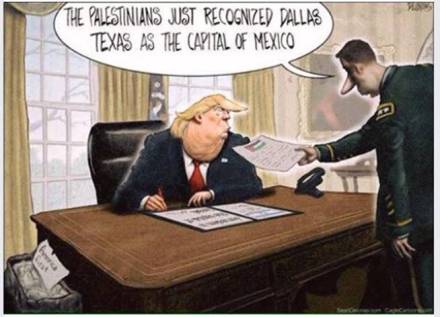
I concur. And I’ve had a few other thoughts about it too profane to write in this public blog. I also got some comic relief from the tension with a cartoon my cousin Marty sent me:

TrumpCapitalDeclaration
Cartoon by Sean Delonas – See SeanDelonas.com

I have been reluctant to write about “the Troubles” (to borrow the Irish term), which span many decades and have roots going back at least a century. I am fearful of appearing ignorant, because every day I am here, I learn more about what I didn’t know. How much more don’t I know?

I am also fearful of offending, of not fully relating the just grievances that so many in this region carry within their hearts. I also worry about “taking sides” because I believe I cannot be a peacemaker by taking sides, nor is it possible to speak simply (in a blog post or a 600-word newspaper column, for instance) about something that is so incredibly complex. Still, a few things are certain:

First — this is not just a two-sided conflict, even though it is often referred to as the “Israeli-Palestinian” conflict. Dozens of different political parties, many different religions and ethnicities, scores of “mini-regions” and economic interests within the Israeli and Palestinian lands — all have a stake in what happens here, each holding different views, desires, complaints, and prejudices.

Second — Trump has completely trashed any chance the U.S. could be an “honest broker” to bring the parties to the negotiating table. The same thing applies to nations as to individuals: you cannot be a peacemaker if you clearly favor one side.

Third — On a completely personal note, I weep for the burdens that the people of this land carry. The so-called “Security Barrier” or the “Wall that Netanyahu Built” has made people’s lives miserable, particularly those who live in a Palestinian area and must travel to an Israeli area to work or go to school or visit family. And it is the Israelis who control when and how people can move through that barrier. Frequently, people are subjected to humiliating, harassing, or erratic behavior on the part of the border guards. The Wall is an ugly scar, both on the land and on the hearts of the people.

One Sunday morning here at Tantur, we came to breakfast looking forward to a small Advent celebration of singing and storytelling for the children. But there was no breakfast because the man who staffs the kitchen on Sunday mornings was delayed at the Checkpoint. Everyone lives with the uncertainty of not knowing whether they will be able to get to work on time, or do a host of other things that those who live in the U.S. simply take for granted.

Israel cannot claim to be a democracy while it restricts freedom of movement for so many people who live here. Netanyahu and other leaders of Israel say they are protecting the people of Israel with this Wall, but I think they are only earning scorn, and in the end, more enemies. It is as if the U.S. government denied freedom of movement to EVERYONE going in and out of Las Vegas to prevent another crazy gunman from killing people at a country music concert in that city. One understands the impulse to retaliate, but it is senseless if the means of retribution hurt innocent people, and fail to accomplish the desired security anyway.

Every Saturday, I work a shift at the Reception Desk. The property is walled, and there are only two entrance/exit points — an iron gate at the driveway, and what we call the “Bethlehem Door” which opens to a walkway that many employees and guests use to walk to the Checkpoint through the Wall to Bethlehem and other nearby Palestinian towns. At the reception desk are two large television monitors which display views of perhaps 30-35 security cameras trained on many parts of the property, both indoors and outdoors, including these two entrances. Whoever staffs Reception must press the right buzzer or enter the right code to allow people to enter (and leave) the property.

So last Saturday, I buzzed in Issa, our chef. On the TV monitors, I watched his face as he stood waiting for the Bethlehem Door to open. It was a sorrowful face, a worried face. My heart ached for him (and for all of us), but especially because Issa is usually so cheerful and upbeat. When he reached the Reception Desk, I asked him if he was ok, told him I saw that he looked worried or sad. He said: “We’ll be ok, we will… but why did he have to do it before Christmas? Why?? It’s supposed to be a joyful time.”

Why indeed.


Party, Party!

Lest anyone think that I’m spending all my time in quiet contemplation and intense prayer, let me say that Tantur is a place that knows how to throw a party! Likewise pretty much all of Israel and Palestine, and Thanksgiving week brought me the gift of TWO parties — one the annual Thanksgiving celebration at Tantur, and the other a fundraiser for the Nursing School of nearby Bethlehem University.

Since Tantur is sponsored by an American institution, Notre Dame University, they go all out to create a traditional Thanksgiving feast — for staff, for students and other program participants who happen to be here then, and for invited guests who are friends and partners of Tantur. We had around a hundred people here for our Thanksgiving feast.

One of the managers asked me on Wednesday if I could organize some decorations for the lobby to create the festive spirit for arriving guests as well as those of us who live and work here. Soon I had many people enthusiastically offering ideas and contributions — only a little of it was “store-bought” while most decorations were crafted from the natural products of the plants, trees, and other vegetation right here on the property. Here are some pictures:

We began with evening prayers of gratitude, a Taizé service led by Brother Emile of the Taizé community in France, who has been in residence with us this month. Then, just to make sure no one went away hungry, there was a Social Hour first with wine, beer and piles of snacks — nuts, chips, cheese & crackers, salami, dried dates, figs and apricots.

We  have a magnificent chef, who made a traditional meal with Palestinian flair. Turkey, stuffing and pumpkin pie, for sure, but I made the cranberry relish — unknown in the cuisine here, but much appreciated by the Americans in the crowd. Chef Issa especially outdid himself in decorating the dining room with fruit displays, including a giant white pumpkin carved into a bowl for cider (laced with white wine and bits of fresh apple).

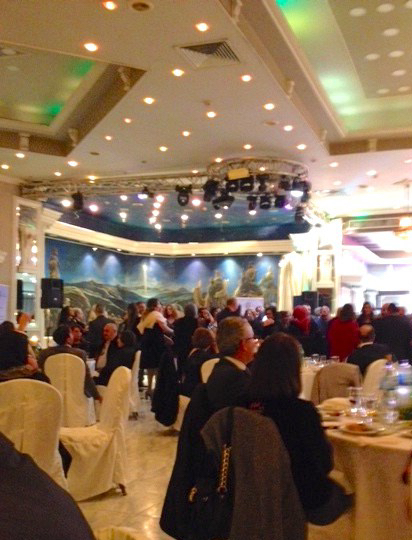
On the night after Thanksgiving, I was invited to another party — a gala dinner that was a fundraiser for the Nursing School at Bethlehem University.  In many ways it resembled the higher education fundraisers I’ve attended back home in the U.S., but with one big difference: the dance floor was hopping with dancers and LOUD music from the DJ all night long, punctuated just occasionally by a few speeches about the University and  the fun-filled drawings for raffle prizes.

The Gala was held at a function hall that mostly hosts weddings, I was told, which made me giggle a little at the huge wall mural behind the dance floor — the three Wise Men on their camels, looking out on the star and the valley where the manger lay! We were in Bethlehem, after all. I’m not sure you can make out the mural in this photo, but if you have a way to zoom in, you’ll see it.

TanturBethlehemU-Gala

The invitations to the Gala said the affair began at 7:30 but only a few people were there when we arrived right on time. Finally by 8:30 the room began to fill, the food kept coming for hours, and the dancing was still going strong when we left around 11:00 pm. It was a party worthy of the name … and a memorable Thanksgiving weekend for me.